
Post-Surgery Home Nursing Care in Cameroon
The surgery went well. The doctor is pleased. And now, after a few days at the hospital, your family member is being discharged. Everyone is relieved — and a little scared.
Because the hard part, in many ways, is about to begin.
Post-surgery care is critical. The decisions made in the first two to four weeks after an operation can determine whether a patient recovers fully and quickly, or whether complications develop that prolong suffering and require re-admission.
In Cameroon, most families navigate this period with minimal professional guidance. This article aims to change that.
Why Post-Surgery Care at Home Is So Important
When a patient is discharged from Limbe Regional Hospital, Buea Regional Hospital, or any healthcare facility in Cameroon, they receive discharge instructions. These instructions are important — but they assume a level of knowledge and resources that not every family has.
Post-surgery risks don’t disappear when you leave the hospital. They include:
- Surgical site infections — the most common post-surgery complication
- Deep vein thrombosis (blood clots) from immobility
- Pneumonia, especially in patients who’ve had chest or abdominal surgery
- Wound dehiscence — when a surgical wound partially or fully opens
- Medication errors, especially with pain management
A trained home nurse can identify and address these risks before they become emergencies.
What Post-Surgery Home Nursing in Cameroon Looks Like
At Global Health Compass Limbe, our post-surgery home nursing service typically begins the day after discharge. Here’s what it involves:
Wound assessment and dressing
We assess the surgical site at every visit. We look for signs of infection (redness, swelling, discharge, unusual odour), change dressings using sterile technique, and document the wound’s progress. If something concerning is observed, we contact the surgeon immediately.
Vital sign monitoring
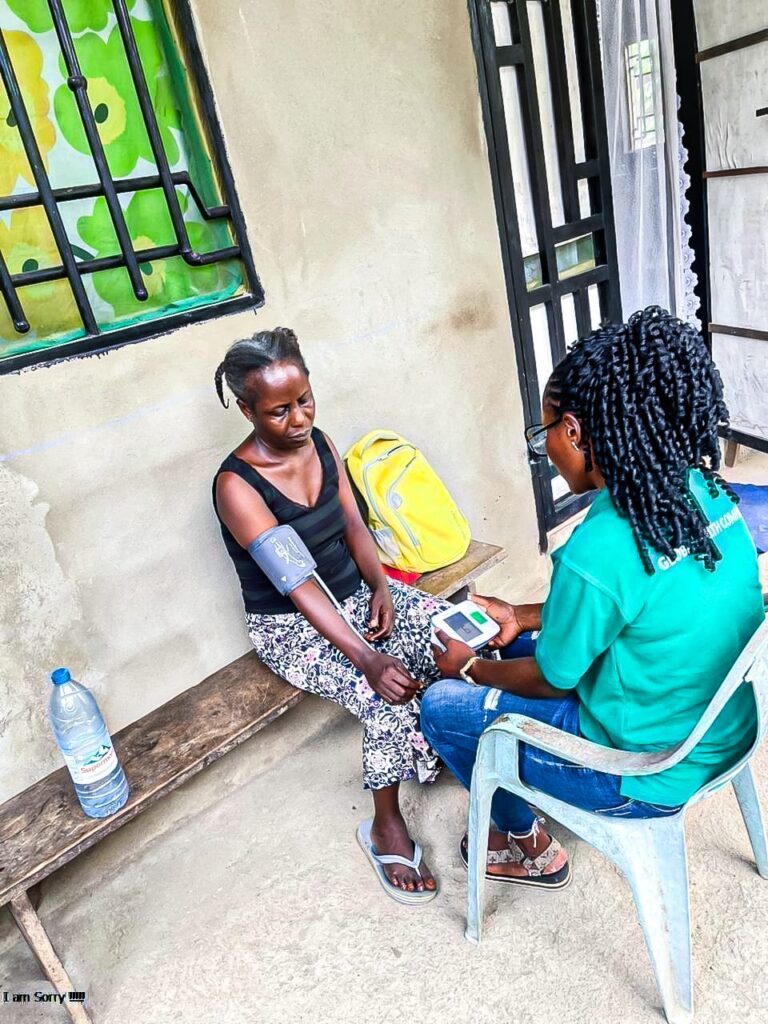
Temperature, blood pressure, pulse, and respiratory rate are checked regularly. A fever after surgery, for example, is an early warning sign of infection that should never be ignored.
Pain management support
Many patients in Cameroon either over-medicate (increasing risk of dependency or side effects) or under-medicate (suffering unnecessarily) after surgery. Our nurses ensure medication is taken correctly, at the right times and in the right doses.
Mobility and positioning
After surgery, patients need to move — but carefully. We guide patients through safe movement, help them change positions to prevent pressure sores, and teach families how to assist without causing injury.
Nutritional support
Surgery is physically traumatic, and recovery requires good nutrition. We advise on what patients should be eating and flag any concerns about appetite or swallowing.
�� In our experience across the Southwest Region, the most common post-surgery complications we see are infected wounds — often because families didn’t know how to properly clean and dress the site, or couldn’t afford repeated clinic visits for dressing changes. Home nursing eliminates that risk.
Practical Things to Prepare Before Your Patient Comes Home
If you know a family member is being discharged soon, here’s how to prepare:
- Set up a comfortable, accessible sleeping space — ideally on the ground floor if the patient has limited mobility
- Clear pathways to the bathroom to reduce fall risk
- Buy or prepare any prescribed medications before discharge day
- Identify a nearby pharmacy that stocks wound care supplies
- Designate one family member as the primary contact and caregiver
- Contact a home nursing service before discharge — not after problems arise
When to Call for Emergency Help
Even with the best home care, emergencies can happen. Call for help immediately if your post-surgery patient:
- Develops a high fever (above 38.5°C)
- Complains of severe or worsening pain
- Has a wound that is opening, bleeding heavily, or smells bad
- Shows signs of confusion or unusual sleepiness
- Has difficulty breathing
In these situations, don’t wait and see. Get to Limbe Regional Hospital or the nearest emergency facility immediately.
Post-surgery recovery in Cameroon doesn’t have to be guesswork. With the right professional support at home, patients recover faster, families feel less overwhelmed, and complications are caught early.
�� Contact Global Health Compass Limbe before your loved one is discharged. Our post-surgery home nursing team is ready to support your recovery — at home, in Cameroon.